About
MBChB, MRCGP, DRCOG, Dip. Practical Dermatology
Certified Lifestyle Medicine Physician (Dip. BSLM)
Professional Coach, NLP Practitioner and Clinical Hypnotherapist
Meditation & Breathwork Teacher
Trauma-Informed Transformation Specialist for High-Performing Professionals
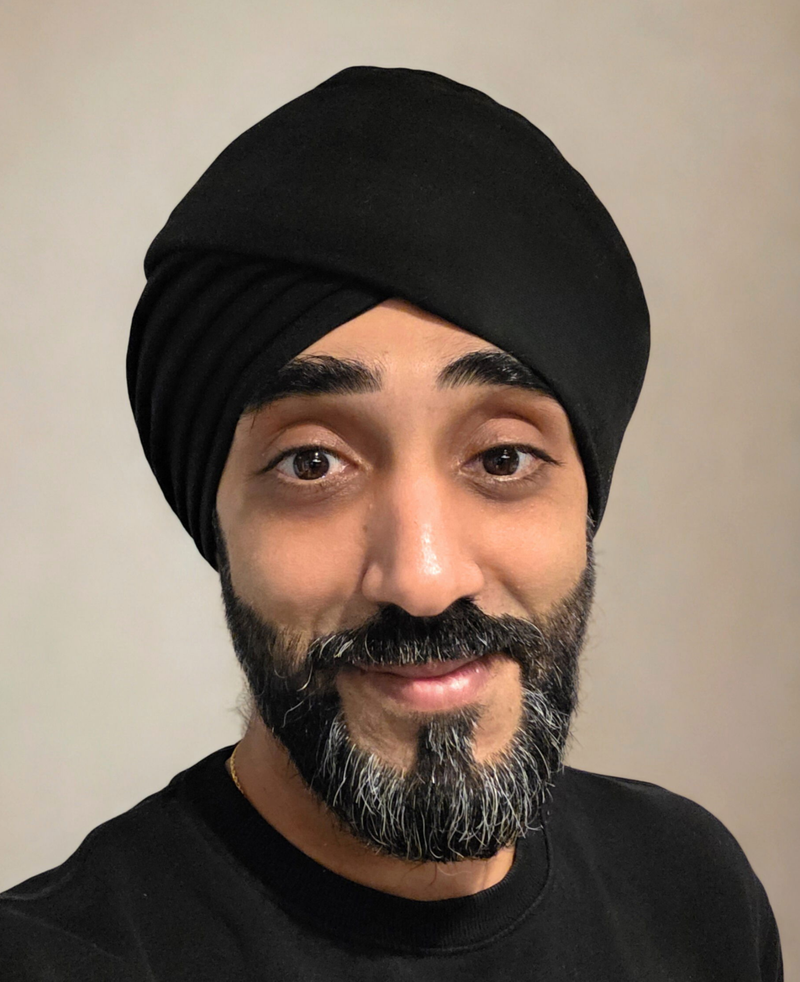
Dr Ranj Sagoo is a UK-trained and licensed medical doctor with over two decades of clinical experience, operating at the intersection of medicine, psychology and high-performance transformation.
He graduated with his medical degree (MBChB) from the University of Leicester in 2006 and subsequently trained in Orthopaedics and Surgery before qualifying as a General Practitioner in 2013, achieving Membership of the Royal College of General Practitioners (MRCGP).
Alongside his ongoing NHS clinical work, Dr Ranj has developed a specialist focus in trauma-informed transformation for high-achieving professionals.
His work addresses the internal pressures, unresolved emotional conditioning and subconscious patterns that often sit beneath outward success.
He holds advanced qualifications in counselling, professional coaching, NLP and clinical hypnotherapy (accredited by APC, EANLP and CMA), and is a qualified Meditation and Breathwork Teacher. His approach integrates nervous system regulation, identity recalibration and subconscious reprocessing within a structured, clinically grounded framework.
Dr Ranj further holds the Diploma in Lifestyle Medicine with the British Society of Lifestyle Medicine (BSLM), ensuring his work maintains both psychological depth and physiological integrity.
He is the published author of Self-Worth: And Where to Find It, a psychologically informed exploration of identity, self-belief and internal leadership in modern professional life.Today, Dr Ranj works privately with high-performing individuals who require more than coping strategies. His clients seek precision, discretion and measurable internal transformation — enabling them to lead, perform and live with clarity, emotional regulation and self-trust.
His methodology combines:
• Trauma-informed subconscious recalibration
• Identity-level transformation
• Executive nervous system regulation
• Strategic behavioural alignment
• Long-term resilience architecture
The outcome is not surface-level change, but sustained internal composure, confidence and psychological freedom.
Dr Ranj is also Co-Founder of The Mindful Mixtape Podcast, a platform exploring mindset, resilience and contemporary performance psychology.
Outside of his clinical and transformational work, he is an accomplished fine artist with a particular focus on wildlife — reflecting the precision and depth that equally define his professional practice.
The Journey
Over two decades in clinical medicine as a General Practitioner, I developed a rigorous understanding of human physiology, pathology and psychological distress.
I also recognised a structural limitation.
Conventional medicine stabilises disease effectively. It does not recalibrate the deeper drivers of performance — chronic stress imprinting, unresolved trauma, identity conditioning and sustained nervous system dysregulation.
Many high-functioning individuals were medically stable, yet internally misaligned.
To address this gap, I undertook advanced training in trauma-informed transformation, qualifying as a Clinical Hypnotherapist, NLP Practitioner, Lifestyle Medicine Physician and Meditation and Breathwork Teacher.
Today, I integrate clinical medicine with subconscious reprocessing and nervous system regulation to deliver structured, precision-based transformation.
The objective is not symptom management.
It is systemic recalibration — enabling high-performing professionals to operate with composure, clarity and sustained resilience.
I also recognised a structural limitation.
Conventional medicine stabilises disease effectively. It does not recalibrate the deeper drivers of performance — chronic stress imprinting, unresolved trauma, identity conditioning and sustained nervous system dysregulation.
Many high-functioning individuals were medically stable, yet internally misaligned.
To address this gap, I undertook advanced training in trauma-informed transformation, qualifying as a Clinical Hypnotherapist, NLP Practitioner, Lifestyle Medicine Physician and Meditation and Breathwork Teacher.
Today, I integrate clinical medicine with subconscious reprocessing and nervous system regulation to deliver structured, precision-based transformation.
The objective is not symptom management.
It is systemic recalibration — enabling high-performing professionals to operate with composure, clarity and sustained resilience.
My Philosophy
My work is grounded in a consistent observation across two decades of clinical and transformational practice: High-achieving individuals often sustain exceptional external performance while privately absorbing prolonged stress, internal pressure and unresolved emotional load.
They fulfil responsibilities.
They lead.
They deliver.
Yet internally, they operate on depletion.
Outward success can coexist with chronic overextension, suppressed stress and identity misalignment. Over time, this erodes clarity, composure and self-trust, often subtly, but cumulatively.
Left unaddressed, the cost is significant: diminished resilience, reactive decision-making, burnout cycles and a quiet detachment from purpose.
I specialise in intervening at that inflection point.
Not with motivational rhetoric.
Not with temporary relief.
But with structured recalibration — addressing the underlying patterns that shape behaviour, stress response and identity.
I have guided professionals through transformations that extend far beyond symptom reduction. The outcome is not simply “feeling better.” It is restored internal authority — renewed clarity, emotional regulation and alignment between performance and identity.
When the underlying architecture shifts, everything downstream follows:
Leadership strengthens.
Relationships stabilise.
Energy returns.
Decision-making sharpens.
This work is not about coping more effectively.
It is about restoring control at the level that matters most — internally.
They fulfil responsibilities.
They lead.
They deliver.
Yet internally, they operate on depletion.
Outward success can coexist with chronic overextension, suppressed stress and identity misalignment. Over time, this erodes clarity, composure and self-trust, often subtly, but cumulatively.
Left unaddressed, the cost is significant: diminished resilience, reactive decision-making, burnout cycles and a quiet detachment from purpose.
I specialise in intervening at that inflection point.
Not with motivational rhetoric.
Not with temporary relief.
But with structured recalibration — addressing the underlying patterns that shape behaviour, stress response and identity.
I have guided professionals through transformations that extend far beyond symptom reduction. The outcome is not simply “feeling better.” It is restored internal authority — renewed clarity, emotional regulation and alignment between performance and identity.
When the underlying architecture shifts, everything downstream follows:
Leadership strengthens.
Relationships stabilise.
Energy returns.
Decision-making sharpens.
This work is not about coping more effectively.
It is about restoring control at the level that matters most — internally.
My Unique Approach
I do not focus on symptom management or surface-level coping strategies.
Coping sustains functionality. It does not create internal freedom.
My work operates at a deeper level — identifying and recalibrating the cognitive, emotional and physiological patterns that drive how you think, decide and respond under pressure. The result is change that is integrated, sustainable and structurally aligned with who you are becoming.
Identify the Root Drivers
We uncover the stress you have normalised, the identity-level beliefs shaping your decisions, unresolved trauma patterns and performance-limiting behaviours such as overextension, hyper-responsibility or chronic overanalysis.
The objective is precision — resolving the driver, not managing the symptom.
Recalibrate the Subconscious Architecture
Through advanced hypnotherapy and NLP, we work directly with the subconscious frameworks that govern behaviour, self-perception and emotional response.
This is not forced mindset correction. It is structural rewiring — so new behaviours feel natural rather than effortful.
Regulate the Nervous System
High performance under sustained pressure requires physiological regulation.
Chronic stress imprints are not cognitive alone — they are embedded within the nervous system. Through breathwork, meditation and trauma-informed regulation protocols, we restore composure and strategic calm — even in demanding environments.
Restore Strategic Alignment
True transformation is systemic.
We rebuild internal boundaries, decision clarity, energy regulation and self-trust — restoring alignment across leadership, relationships, health and identity.This is not motivation.
It is recalibration.
Not a quick fix.
A structured reset for those ready to move from sustained pressure into controlled, confident performance — internally composed, externally effective.
Coping sustains functionality. It does not create internal freedom.
My work operates at a deeper level — identifying and recalibrating the cognitive, emotional and physiological patterns that drive how you think, decide and respond under pressure. The result is change that is integrated, sustainable and structurally aligned with who you are becoming.
Identify the Root Drivers
We uncover the stress you have normalised, the identity-level beliefs shaping your decisions, unresolved trauma patterns and performance-limiting behaviours such as overextension, hyper-responsibility or chronic overanalysis.
The objective is precision — resolving the driver, not managing the symptom.
Recalibrate the Subconscious Architecture
Through advanced hypnotherapy and NLP, we work directly with the subconscious frameworks that govern behaviour, self-perception and emotional response.
This is not forced mindset correction. It is structural rewiring — so new behaviours feel natural rather than effortful.
Regulate the Nervous System
High performance under sustained pressure requires physiological regulation.
Chronic stress imprints are not cognitive alone — they are embedded within the nervous system. Through breathwork, meditation and trauma-informed regulation protocols, we restore composure and strategic calm — even in demanding environments.
Restore Strategic Alignment
True transformation is systemic.
We rebuild internal boundaries, decision clarity, energy regulation and self-trust — restoring alignment across leadership, relationships, health and identity.This is not motivation.
It is recalibration.
Not a quick fix.
A structured reset for those ready to move from sustained pressure into controlled, confident performance — internally composed, externally effective.
Why I Have Absolute Confidence
in This Work
in This Work
My confidence in this methodology is not theoretical. It is grounded in both clinical application and disciplined self-application.
Throughout my professional development in coaching, NLP and trauma-informed practice, I subjected these methods to rigorous personal scrutiny. I examined my own behavioural patterns, decision-making tendencies and performance limitations with the same precision I apply in clinical environments.
In doing so, I identified subtle but significant self-limiting patterns — including subconscious performance inhibition and internalised standards rooted in early conditioning. These patterns were not obvious. They operated quietly beneath competence and productivity.
Through structured coaching and subconscious recalibration, those constraints were dismantled.The shift was not motivational. It was structural.
Decision-making became cleaner.
Risk tolerance stabilised.
Internal resistance diminished.
The same applied to long-standing physiological and behavioural conditioning linked to early body image imprinting and performance-related self-perception. By applying trauma-informed hypnotherapy and subconscious reprocessing techniques, deeply embedded associations were neutralised efficiently and sustainably.
The result was measurable internal freedom — not through willpower, but through recalibration of the underlying architecture.
This work is effective because it operates beneath surface cognition.
It addresses the driver, not the symptom.I do not teach techniques I have not stress-tested personally.
I apply what I know works — because I have experienced its precision and durability first-hand.
Throughout my professional development in coaching, NLP and trauma-informed practice, I subjected these methods to rigorous personal scrutiny. I examined my own behavioural patterns, decision-making tendencies and performance limitations with the same precision I apply in clinical environments.
In doing so, I identified subtle but significant self-limiting patterns — including subconscious performance inhibition and internalised standards rooted in early conditioning. These patterns were not obvious. They operated quietly beneath competence and productivity.
Through structured coaching and subconscious recalibration, those constraints were dismantled.The shift was not motivational. It was structural.
Decision-making became cleaner.
Risk tolerance stabilised.
Internal resistance diminished.
The same applied to long-standing physiological and behavioural conditioning linked to early body image imprinting and performance-related self-perception. By applying trauma-informed hypnotherapy and subconscious reprocessing techniques, deeply embedded associations were neutralised efficiently and sustainably.
The result was measurable internal freedom — not through willpower, but through recalibration of the underlying architecture.
This work is effective because it operates beneath surface cognition.
It addresses the driver, not the symptom.I do not teach techniques I have not stress-tested personally.
I apply what I know works — because I have experienced its precision and durability first-hand.